I am doing some changes in the concept of the blog.
Idea is to be able to give more free advice to concrete marketing problems to make the blog more interesting! More info in the coming days!!


Tuesday, November 8, 2011
Thursday, November 3, 2011
Marketing to the 99%
With the social unrest we are seeing all over Europe and the US, it seems to me that new consumer needs are arising. It’s not so much about physical needs anymore, but about intangible social needs corporations will need to address in the future.
The power of SEO
Against common believes, SEO seems to be the number 1 source for leads, for both both B2C and B2B markets, beating out paid search marketing and social media marketing, according to the latest 2011 State of the Marketing Report, a survey to online marketers.
Sunday, September 11, 2011
Foster the right entrepreneurship!
A clear message came though the various meetings from the newly appointed CEO along his Road-show: “We are all entrepreneurs!”. And reactions were always similar. First silent, then a comforting soft murmuring. People seemed to agree.
Thursday, September 8, 2011
What is to come on brand personalization?
I found an article this morning about noodle brands in Japan picturing the faces of restaurant chefs on their packagings. An interesting revelation!
It seems that the brands have choosen not to use their brand names anymore and use instead the many different brands of small neighborhood restaurants and their chefs! And i am not talking about a group of celebrity chefs appearing on a TV program, it is really thousands of local chefs!!
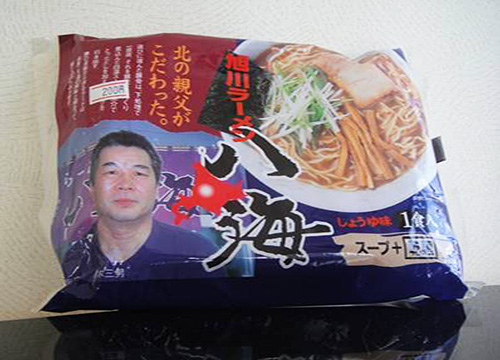
It seems that the brands have choosen not to use their brand names anymore and use instead the many different brands of small neighborhood restaurants and their chefs! And i am not talking about a group of celebrity chefs appearing on a TV program, it is really thousands of local chefs!!
Monday, September 5, 2011
10 survival tips for Entrepreneurs
I wrote this post completely out-of-the-blue this morning, it came like an inspiration.
- INTUITION: Follow your instinct. That means your instinct, not that of your friends or your father. Believe in yourself.
These 10 tips reflect my gut-feeling about the success factors for any entrepreneurial venture.
- INTUITION: Follow your instinct. That means your instinct, not that of your friends or your father. Believe in yourself.
Wednesday, August 31, 2011
The machine revolution
Long are the times when a mixer and a toaster were the only gadgets in our kitchens! Then came the coffee machine, the steamer, the microwave, even the bread machine and many others.
Tuesday, August 23, 2011
Frozen Drinkable Ice-Cream, a New Segment in Ice-Cream Consumption?

Last Friday, in the Geneva Airport on my way to Barcelona I came across Unilever’s newest launch, the Café Zero, a mix between an ice cream and a coffee-flavored drink! According to Unilever, Café Zero is the first drinkable ice cream and incorporates a new ice-cream technology.
Sunday, August 21, 2011
Selling at the Bottom of the Pyramid (BOP)
It is usually argued that the great potential of developing countries is not in its natural resources but in its growing population. Indeed, as countries develop, people at the bottom of the pyramid gain purchasing power and can start accessing manufactured consumer goods.
Wednesday, August 17, 2011
The secret to GREAT Marketing
GOOD MARKETING is about COMMON SENSE. There is no secret formula, it’s in the books. Sorry.
But, what is it that makes a consumer change from buying brand A into buying brand B? What is it that makes consumers tick?
Monday, August 15, 2011
Understanding Route-to-Market (RTM)

Route-to-market is about defining how to serve the right customers, in the right markets, through the right channels with the right products and value propositions. Objective is to recruit, retain and loyalize customers while driving sales and growing market share at the lowest possible cost.
Wednesday, August 10, 2011
The secrets of the Isleña business model
2 years ago a group of entrepreneurs from Ibiza launched Isleña, the beer of Ibiza.
Today, the iconic beer is a reference in the island and its popularity is on the rise, especially among local youngsters and tourists.
Wednesday, August 3, 2011
Private Label Strategies for Brands
Private Label is as strong as ever. Here in Switzerland for example PL represents 60% of the total market and that means an ever increasing pressure for shelf-space. Brand leaders should remain safe, but secondary brands need to react if they don’t want to be delisted.
Friday, July 29, 2011
Performance of on-line Marketing capabilities
Finally we have the latest CMO’s report on the 2011 state of marketing!
Tuesday, July 26, 2011
The power of stories
The essence of positioning is about pointing out a relevant and credible trait of your brand/product to the consumer in order to differentiate against your competitor while adding value to your target.
Sunday, July 24, 2011
Bigger packaging, bigger consumption
Developing an optimal portfolio of package sizes is of key importance for Brand Managers, as it is the basis for having a competitive portfolio.
Thursday, July 21, 2011
Why do consumers respond to Promotions?

I would like to dedicate this post to a research published by Pierre Chandon, Brian Wansink and Gilles Laurant in the October 2000 Journal of Marketing, which helped demonstrate empirically that monetary savings cannot fully explain why consumers respond to promotions.
Wednesday, July 20, 2011
Why SKU optimization makes sense
SKU optimization is a process usually not well understood in many organizations. People will complain and wonder why a product that makes considerable revenue needs to be stopped.
Tuesday, July 19, 2011
Negotiating Trade Expenses
Nowadays some FMCG companies are spending more money on the trade than on their actual marketing budgets, and realistically, as retailers continue to concentrate, trade expenses will continue to rise.
Monday, July 18, 2011
Setting up your Corporate Marketing Strategy
Whether a company, an NGO, city, government entity or branch of the armed forces, truth is Corporate Marketing is usually a poorly defined role within most organizations. It is something ethereal and inconsistent, fluctuating as the organizational structure shifts from centralized to decentralized and back.
Friday, July 15, 2011
6 Marketing tips they didn’t teach you at Business School!
- Steal with pride: wether a campaign, a design or a new product, it is very difficult to innovate today and most improvements come in the form of small steps rather than great leaps forward. Be sure not to infringe any copyright but copy, steal and get inspired looking at your competitors and other markets!
Thursday, July 14, 2011
Mercadona, the spanish Migros

If I were to point out a retailer for its world-class best-practices, that would be the Swiss retailer MIGROS. Its great products and great communication have make it a true Swiss icon, but it is its long term vision for profitability and sustainability that have made the Migros model a reference for its operations, customer service and employee relations.
Wednesday, July 13, 2011
Relaunches that make sense
Brands are like machines, they work or don’t work, but even if they work, they always need small repairs and revisions.
Friday, July 1, 2011
Marketing in a time of CRISIS (Pricing and Promotions)

It is easy to justify a price reduction when a crisis strikes.
However, marketers will have to ensure a relative price position versus the main competitors is maintained.Also, such strategy will have to be thoroughly analyzed from a financial point of view, as it will affect growth ratios and profitability. All decisions must be taken understanding the full risk and reward.
Thursday, June 30, 2011
Managing Inflation
Having to increase product prices to cope up with high inflation is a difficult task marketers are confronted in some markets. While i was in Ukraine for instance, we had an annual estimation of a minimum cumulated inflation ratio of 17%. This meant prices had to be revised all year long!
The standard procedure is to plan revision milestones in advance, in agreement with all the involved departments. Ideally, such exercise should be done for all categories. This creates a high degree of complexity for the entire organization, especially for the sales department, but a correctly coordinated price increase strategy will give you credibility vs random and unjustified increases.
Category coordination is especially important as direct comparison from consumers might not be necesarily the right thing to do, and the products loose value perception fast.
Timing needs as well to be coordinated with the actions undertaken by competition. Consider whether you want to follow a reactive or a proactive strategy. For instance, a number two in the market should better have a reactive strategy, waiting to see what the main competitor does. A reactive strategy is justified because in such scenario a move in the opposite direction would be fatal.
Posted by Ignacio Molins
Wednesday, June 29, 2011
The AXE effect
What is behind the AXE positioning?
It’s very simple, it’s about addressing life interests of a specific target group and getting into their agenda. This is another very commonly used positioning technique. Get to know what your
Tuesday, June 28, 2011
Brand vs villain
A common positioning technique is to position your Brand as the silver bullet to eliminate a threat or a fear. Isn’t that a great benefit?
The thread needs to be something that really worries your consumer, and it needs to be a ominipresent in your consumers everyday life.
Cosmetics- fear a wrinkle? Oral care products –fear caries? are good examples where fear fighting is very effective.
Sometimes even, brands create “villains” and then brand a weapon to fight them. The Swiffer advertisement comes to my mind.
A huge ball of dust knocks on your door. Is dust here to stay? Fortunatly not, because Swiffer takes off all the dust in a simple way!
And then you see the girl kicking the dust-ball out of the door, and the poor dust-ball walks away sad with its luggage... Fantastic!
I could not find the European version of that advertisement, but here is the American version, the villain is even turned into a friendly dust particle!
Interesting, is that the “villain” is commonly used every time you have germs or bacteria or any sort micro-organism that you can well make a caricature of.
Posted by Ignacio Molins
Monday, June 27, 2011
The effectiveness of sensual advertisement
It is out of question: sex is a powerful tool to call up people’s attention! Whether a perfume advertisement with a sexy model, or a provocative underwear campaign, we cannot resist to take a look at a sensual picture.
![]()
Posted by Ignacio Molins
If you are introducing a new product, sensual advertisement might be an easy way to do exactly that, to generate AWARENESS.
However, if the nature of your product is not directly related with the form used in your campaign (in this case the use of sensuality), then your message will most probably not have a very longlasting effect.
Take a look at the below example from Nokia. Sure, such a picture will make me take a look at it, but after a couple of minutes I will not be able to recall the brand.

Why is that? Because the advertisement is too generic. Sex is being used only to call the attention, you could have put any object in a bigger size and the message of the advertisement -Nokia telephones include a camera with zoom- would have been equally understood.
Also, it is very difficult to be truly different with sensuality. We are exposed to so much sensuality that images really need to transgrade the ordinary to cut through.
So what does sensuality need to be effective? In my opinion it needs either to have a clear link between the nature of the product and the form, or to go beyond sensuality to a second degree of understanding.
For example, in the famous Wonderbra campaign you can see the clear link, between product and form. Here Wonderbra is selling exactly what they are showing.
![]()
An advertisement that went beyond sensuality, is the Benetton campaign done in 1992, the kissing-nun. Benetton not only pictured 2 people kissing, but challenged the principle of religious celibacy, the picture encourages viewers to refuse traditional constraints and thereby directly attacks the basic values of Catholicism. The brand is still remembered today for that.
![]()


Posted by Ignacio Molins
Friday, June 24, 2011
Best day of my life
I hope you will not be dissapointed, but the title of this post is only a test!
I was wondering if a post with this title would trigger lots of visits… if it doesn’t, do you think the title “worst day of my life” would have been better? How a about a more “spicy” title? Does sex really sell?
The real purpose of this post is to gather some toughts about communication and human emotions.
Take a look at cars. A car might be a great piece of engineering, with great horse power and the latest technologies -BMW is a driving machine, isn’t it?, but without an emotional side it’s only a car - BMW is about the pleasure of driving!. In a similar way, oder car manufacturers use emotions like Volvo using family and security or Toyota using clean energy and sustainability.
But, why is that? Why are emotions so important?
Imagine "the human mind" as a rider atop an elephant, or an alligator hunter wrestling an alligator. In both metaphors the person (the rider or the alligator hunter) represents
your conscious, rational side of the mind and the elephant or alligator represent
your unconscious, primal, emotional, automatic side of the mind. You see how the person, the rational side is at first under control, but also, how emotions can suddently pounce without warning! Emotions are difficult to control and can easily take over the situation!
In this sense, during the “purchase process”, the rational (rider and wrestler) gives the OK signal for a purchase, and it is the elephant or alligator that takes care of the rest. Rational thought leads customers to be interested but it is emotion that sells! It is emotions that engage and trigger action, with all their power and innertia!
As a marketer, you will have to build communication strategies and brand values that help you capitalize on emotions. Don't always chase "share of wallet – chase "share of heart". Always reassure on the rational, on the product features and quality, but, try to involve as much emotions on the final purchase decision proces!
On the coming days I will gather some toughts about SEX and advertisement! I suspect SEX doesn’t sell as well as we tend to believe. By the way, the new Mercedes S class has 8 AIRBAGS! More to come!

Posted by Ignacio Molins
Thursday, June 23, 2011
Marketing in times of CRISIS (Part 2. Comunication/Branding)
Loyalization decreases in a moment of crisis and consumers become more open to experiment with new products. In such moments main motivation is not the desire or curiosity for new products but the better value-for-money proposition of other brands. It is therefore typical that consumers switch in this moment to second-pier brands. As a marketer you will have to make sure the added value provided by your brand is clearly communicated and perceived.
Another common phenomenon is the so called “compensation effect”. As the psychological anxiety rises, consumers are disposed to buy the brands being “premium” for the segment. This functions as a “consolation”, to get satisfaction that before went to purchases that are not accessible anymore (for example cutting on leisure expenses and entertainments).
This two-way-phenomenon (buying cheaper and more premium brands) that I have described is also something that is being watched in the last years in most mature markets, independently of the crisis. Consumers tend to “trading-up or trading down”, depending on the relevance of the category. The logic behind is rationalizing expenditure: less but better of the “good stuff” and cost saving on the “commoditized” or irrelevant products.
This is the kind of context where it is important to have solid brands with solid propositions, and to invest in brand building, differentiation and loyalization. As Kevin Roberts puts it, it’s about, building “lovemarks”, it’s about gaining high respect (quality and functional benefits), but also high love (through emotional benefits).
In this sense, brand building should:
a) help build both high Respect and high Love brands
b) tell a Story that Connects and Engages
c) create strong Icons and Images
d) communicate a “Big Idea” in a consist way over time

Wednesday, June 22, 2011
Marketing in a time of CRISIS (Part 1. Packaging)
Make no mistake the best weapon to overcome a period of crisis is having a good product or a great innovation.
Having said that, in today’s post I will talk about how a period of crisis can affect consumer behaviour, and present some commonly used initiatives that marketers can put in place to counteract it.
The first thing we need to take into account regarding consumer behaviour is that consumption habits will change, and it will be your task to understand how and why.
Let’s take for instance FOOD consumption as an example.
An average person makes over 250 food decisions each day. Reactions can start with a simple revision of the basket structure (for instance by reducing on non essential products), to more complex conducts, like for instance searching for cheaper ways to eat and shop (e.g. buying fruits/vegetables, meat/fish at markets). Situation can even get truly crude with consumers completely refusing non essential products or switching to the cheaper brands and Private Labels.
In this context, product quality will be under special attention. This is related to consumers’ fears about possible decrease of product quality, as companies will try to maintain their profitability levels. The consumer waits not for “new” quality but for guaranteed quality.
Packaging and formats will also be an important driver to stimulate consumption, as consumers will react by either:
a) maximizing value-for-money expenditure: for example by purchasing cheaper formats, either in absolute out-of-pocket terms (ie. switching to cigarette soft packs, which contain the same number of cigarettes as hard packs but are cheaper), or in price/kilo terms (for instance through bigger family packs). Here some "tricks" for maximizing value-for-money.
· Changing pack content: We need to carefully monitor strategies to lower out-of-pocket as consumers get extremely sensible to volumes in a time of crisis, and it could negatively influence brand image. Such strategies can be misunderstood and perceived as a cheat (“less volume for the same price…”). The only way to counteract this is to clearly communicate the price reduction and make sure they are clearly perceived as such, and not as a reduction on quality or volume.
· Maximizing size impression: A very common strategy used for example in the countlines business. Idea is to “stretch” the product so that visually it looks bigger than it was, although i terms of net content product has not changed.
· Promoting bigger formats: Bigger formats or family formats are always understood as more advantageous by consumers (due to lower price/Kg perception)
b) or reducing consumption frequency (for example drinking 1 or 2 coffees per day instead of 3 or 5). Here some "tricks" for reducing consumption frequency.
- Dosage systems and individual portions: Packages that allow a dosage system and individual portions can be a good way for consumers to apply a stricter portion control.
- Serving sizes: Working on perception of serving sizes or the in-home dosage systems (always taking the nutritional impact into consideration), can be as well a good way to increase consumption and therefore stimulate sales. For instance, if a person decides to eat a bowl of cereal, the size of the bowl may influence how much he or she serves and therefore eats.
- Perception of inventory level: Finally, a good way to increase the “number of purchased-units”, will be to increase perception of what the shopper perceives as the normal level of inventory of that food, because usually inventory estimations are based a person’s own common sense. In this direction, Marketers could help shoppers improve the accuracy of their inventory estimations. This could be done by changing the where and how a product is stored, for instance by transparent packaging designs that facilitate monitoring.
On the coming posts I will further tackle other related topics like pricing, promotional strategies, branding, communication, etc.
Posted by Ignacio Molins
Tuesday, June 21, 2011
Launch new products, not new variants!

It is very common for big companies to compensate an empty innovation pipeline with the launch of new variants. Besides launching new formats, usually new variants will have similar consumer benefits and or consumption habits than the rest of the variants in your portfolio, and will not bring much on-top sales, but rather cannibalize them.
Let’s put an example. Lets say you are selling ice-cream cornets. If you already have vanilla flavor, launching a chocolate and a strawberry cornets will probably be a good thing. But once the main flavours are there, launching an additional new one, will probably not add much. On the contrary, if you further explore other ice-cream categories/needs where you are not present, for instance water based ice-cream, that will make a bigger impact, as you will be either creating a new need if the category is not existing, or stealing volume from a competitor!
Not only that, also new products will reinforce your proposition as a brand and create higher awareness and more arguments for your sales force!
You can also use new products to give your brand a specific “benefit” it did not have before, a “halo” effect. How is now for example Nescafe driving its nutrition-health-wellness agenda? Launch a new “healthier” variant, Nescafe Green Blend, a coffee with a higher degree of antioxidants than regular coffee, and even comparable to those of tea. Automatically the entire range is perceived as “healthier than before”, and the product will help not only to attract new consumers into the soluble coffee market, but also to steal consumers from tea or other “healthier” options (ie. orange juice or milk). As a consequence, the soluble market coffee grows thanks to an innovative new product with a new benefit. If Nescafe would have launched a new cappuccino variant, the impact would have been much smaller.
Here an interesting article about the benefits of Nescafe Green Blend.
If you are interested in growth potential launch new products, not new variants!
Posted by Ignacio Molins
Posted by Ignacio Molins
Monday, June 20, 2011
The power of unexpected Communication
A few days ago i read a story in the news about a student who had rented an outdoor billboard to complain about the difficult working environment in Ireland and how that was going to force him to emigrate. Obviously he wanted to call the attention of possible employers and eventually the trick payed off. Now, if instead of the billboard he would have bough a small insert in the local newspaper, the story would probably have been different and he would probably be still looking for a job...
What is the learning we can get out of this story?
Every single communication agency will tell you that you need to adapt your message to the medium. True.
But, they will also tell you that the selected medium will depend on the message you want to pass and the brand you are communicating. False.
The learning of the story is exactly that, an unexpected medium (billboard) has had a much higher impact than the standard and expected one (the insert).
Interestingly, this learning is not only applicable to the type of medium but also to the moment/place of communication. It is out of question that a pair of new skis will have better chances to sell if you do your communication in a ski resort during the winter season, than if you do it in the beach during the summer. My point is more that within a certain limits of reason, creative ways to deliver your message will often pay out better.
Here is another example. On my last vacation in the south of spain, while driving from Malaga to Granada on the highway, i saw one of the famous "toro de Osborne". It is an outdoor billboard, black and shaped in the form of a bull, an icon used by the famous spanish liquor brand Osborne.
Today these billboards are know by everyone in Spain and have even become a visual reference of spanish culture. Coming back to the point of unexpected communication, these billboards are placed in highways, not a place where you expect communication, neither a place where you would be encouraged to drink alcohol, but a genious communication idea that is today probably a keymilestone of the brands success story.
![]()
Posted by Ignacio Molins
What is the learning we can get out of this story?
Every single communication agency will tell you that you need to adapt your message to the medium. True.
But, they will also tell you that the selected medium will depend on the message you want to pass and the brand you are communicating. False.
The learning of the story is exactly that, an unexpected medium (billboard) has had a much higher impact than the standard and expected one (the insert).
Interestingly, this learning is not only applicable to the type of medium but also to the moment/place of communication. It is out of question that a pair of new skis will have better chances to sell if you do your communication in a ski resort during the winter season, than if you do it in the beach during the summer. My point is more that within a certain limits of reason, creative ways to deliver your message will often pay out better.
Here is another example. On my last vacation in the south of spain, while driving from Malaga to Granada on the highway, i saw one of the famous "toro de Osborne". It is an outdoor billboard, black and shaped in the form of a bull, an icon used by the famous spanish liquor brand Osborne.
Today these billboards are know by everyone in Spain and have even become a visual reference of spanish culture. Coming back to the point of unexpected communication, these billboards are placed in highways, not a place where you expect communication, neither a place where you would be encouraged to drink alcohol, but a genious communication idea that is today probably a keymilestone of the brands success story.

Posted by Ignacio Molins
Friday, June 17, 2011
Nespresso: Delighting Consumers
How is it that all Nespresso consumers, regardless of the expensive price of their coffee are truly in love with the Brand?
Nespresso is DELIGHTING consumers! And what is that really mean?
Delighting means that the consumer's experience with our brand is superior to competition and consistent across every contact point, often exceeding expectations.
Brands can delight by identifying the actions that exceed the consumers’ expectations and understanding the reason-why behind.
A nice example is Nespresso’s Customer Service. Nobody really expects to have good and fast feedback from a company’s Customer Service, and the majority of us would rather forget the mediocre services from Telecomms and Airlines. It is not the case with Nespresso, who is not only putting in place a human interaction, but also actively seeking contact with consumers though the different social media. See below a nice example of a delighted Nespresso consumer.

Furthermore, delighting is also about getting to the core of your consumers and understanding their emotions and motivations. The deeper your understanding the more likely you are to delight.
Nespresso has been able to create an emotional bond with consumers by making coffee a truly aspirational experience. No other brand had before captured the essence of being a “coffee connaiseur”, and Nespresso has done that along the entire value chain, from the sustainability programs for sourcing its raw materials and the involvent of coffee baristas along the entire process, to the superb Shopping Experience in their Boutiques and great Customer Service. Not to mention their world class communication with Clooney.
Such an approach not only helps build a credible and consistent brand, but rather surprises and create sexcitement. It is the unarticulated and unimagined needs that can really delight and lead to loyal and passionate consumers.
Posted by Ignacio Molins
Wednesday, June 15, 2011
The Nespresso secret
Clearly from the product side a unique innovation from Nestlé. Add your own distribution network (Nespresso Boutiques, Customer Service and Internet ordering system) and you have a captive consumer. This has even become their business model: by establishing its own channels, Nestlé is cashing in all the margins traditionally earned by the retailers.
And this retailing trend from big consumer goods companies is here to stay. How else can they grow the business in developed countries? The times when growth was driven by the simple fact that retailers were opening new points of sales is over. Place in the shelves is limited and new products need necessarily to substitute other products if they want to have a real chance of being listed. And honestly, it is becoming increasingly difficult to make people eat more… The logical alternative is to develop your own sales channels… Consumer goods companies will need to go the extra mile!
And how does Nespresso maintain their clientele loyal? From the product side by continuously delivering quality products and innovations, and from the retail side by turning the shopping experience into a sensory experience. I remember the first time I got into a Nespresso Boutique: I was offered to degustate a new coffee flavor and was given a chocolate to accompany it. All done with a smile from a beautiful hostess in a beautifully decorated shop. It felt great to be a coffee connoisseur and I ended up buying both!
Posted by Ignacio Molins
What makes a good retailing concept?
Retailers need to ask themselves what is driving shoppers to their outlets, and I would not hesitate to give you already an answer. It’s DIFFERENTIATION.
I remember visiting the Jewish neighborhood in Antwerp, Belgium, where you could find dozens of jeweler’s, gold and diamond shops all next to each other in a same neighborhood. How is that possible - all competing with similar prices, same products and in the same location? Putting their businesses together these retailers are actually differentiating themselves through VARIETY. The message they transmit is double. As there are so many of them, consumers perceive they will find anything they are looking for. But also, in such an environment consumers perceive prices need necessarily to be fair if businesses want to succeed in the long term.
In the coming posts I will analyze some retailers in detail.
posted by Ignacio Molins
Monday, June 13, 2011
If the product is not good, it won’t sell well in the long term!
Consumers are not stupid, and they do not like to be treated stupidly. A product can be average and still survive, but survival for a bad product is very very difficult.
To illustrate this better, the Nestle 60/40+ Methodology is a good example. According to Nestle, the 60/40+ Methodology is nothing else than “applying good Marketing Practices and common sense to drive growth by creating and selling superior products both in Taste & Nutrition”.
In brand management life at Nestle, this translates into every single product going through 2 types of test, a taste assessment and a nutritional assessment versus competition. Only if the product is 60% superior on taste preference and nutritionally superior, it will be allowed to be launched!
Nestle knows taste is the n°1 decision criteria for any food-product, and Nestle knows they need to deliver healthier products to survive and continue delivering growth. WOWWW!!! Nestle is imprinting success in their genes!
If you have a bad product my recommendation is that you revisit its formulation, packaging or whatever it is that makes it bad. Go back to your product development team, R&D, Application group or whoever it is responsible.
A bad product is a guarantee for failure. A good product is only the first step to getting things working.
Posted by: Ignacio Molins
Friday, June 10, 2011
How can you seduce a primadona?
Consumers today are spoiled. There are so many brands, trying desperately to call their attention that it is hard for them to listen and remain loyal. Today the biggest challenge brands have is being able to stand out and retaining consumers. Certainly, a brand that is transparent to consumer’s eyes will have a hard time selling. In the same way, a brand that cannot create a solid bond with the consumer will soon be substituted by another brand.
That is why a good POSITIONING is the first LEVER for GROWTH. If you feel your brand is unnoticed or simply doesn’t cut through the clutter and consumers seem apathic about it, then you probably have a positioning issue. It might be also a good time to reposition your brand if you have a bad image, or if your category is simply perceived as not relevant anymore.
Here the 4 elements for a good positioning statement. Your brand should fulfill all of them if it wants to have a positioning that leads to GROWTH.
1. Differentiate: Today, more than ever, in this jungle of brands that we live in, brands need to help the consumer differentiate products within a multitude of products. In other words, a brand needs to tell consumers what makes it different than other brands.
2. Make that differentiation relevant: Furthermore, brands need to tell consumers why should buy that particular brand. In the last years, the Private label trend has contributed to the commoditization of many products, hitting all industries. Only the brands that are not “culturally transparent” will be able to survive in the long term. Not being “transparent” means being relevant and being able to involve the consumers into the decision taking process.
Consumers tend to save money on those brands where the implication is low. For instance, in France, toothpaste is a category with a very low implication. Prices as well as the overall market have been going down in the last years. In Brasil however there is a much stronger body and beauty culture. It should therefore not be surprising that Brasil has a higher consumption of toothpaste per inhabitant than France, and that the toothpaste market in Brasil is booming!
3. Reassure: Brands also need to reduce the risk perception of certain products. Too often we see intoxications due to certain food products or cars being recalled from the streets. Why do we buy a Volkswagen rather than a Renault? Because the quality perception of Volkswagen is higher!
Henkel is a good example of a brand that uses its corporate image to endorse its sub-brands. The methodology is simple; after an detergent arvertisement, a small slogan “Henkel Quality” appears. Like this, consumers know that product is not just a brand, but it’s a Henkel brand. And Henkel is a well know company, with many years of history. Automatically associate that to quality. How could otherwise such a big company have become what it is today?
4. Associate your brand to a value: Differentiation has become more emotional. Emotions engage consumers to a much deeper level than pure rational arguments. There are always good rational arguments on both sides of a discussion, but it is the emotional argumentation that finally helps decline the balance on one side or the other. That means 2 things; you need to have good rational arguments, but you also need the emotional ones if you want to close the pitch.
posted by Ignacio Molins
posted by Ignacio Molins
Thursday, June 9, 2011
The Brand Archeologist: Understand your starting point.
Your first task as a Brand Manager is understanding where your brand stands. There is a huge knowledge hidden in your organization about your brand, and you need to unveil it. Whatever you are thinking of doing, most probably it has already been thought by a previous Brand Manager. Recovering his thoughts might save you some precious time and avoid making the same mistakes! Your first task is being a BRAND ARCHEOLOGIST.
Too often, bad marketing managers hire a third party, a consulting company, or some institute to do the job, and re-invent the wheel.
Take market studies into consideration, but don’t take them as the “Rosetta stone” of your brand. They are too easy to manipulate... and often consumers only want to look smart, rather than expressing their real thoughts about your brand. Be careful; don’t let them drive you into the easy and obvious paths!
Go see your consumers, go see your shoppers, understand your value chain, do a visit with your distributors, meet your field sales force, go to the factory! These are the things that will help you make yourself a first picture of the situation.
Be CURIOS and trust your gut feelings!
posted by Ignacio Molins
posted by Ignacio Molins
The importance of commitment for Brand Management
You shouldn’t understand the Brand Management process as a “solo-fight”: you against the organization!
Not only WHAT we achieve is important, but also HOW we achieve it. It is not only getting to the end of the path, but also how you do the path!
Sometimes we can have differences with other team members and it might be difficult to bring other team members in the boat.
Therefore, involvement is KEY.
If you can not involve your other team members, every single minor issue will escalate to a major constraint and jeopardize the main fundaments of your project.
Involvement is a powerful tool.
How do you do something you do not believe in? Personally, if I don’t believe in something my motivation level for doing it is low, and therefore, even if I try to be professional, unconsciously I might not do it as well as it could have been done.
That is why, you need to involve your organization and get the commitment from your key players.
Most important: get the support of your sales team. They are the ones who will translate your marketing strategies at the point of sales!
In order to do that, set a sales agenda and a marketing agenda for your project (your burning platform!) where you identify clearly the different objectives you want to reach with every single initiative, and set a process to reach alignment.
If there is no process in your organization to do this, then set one. The more departments you involve the better. This will probably be the most important pre-requisite you will need to do before successfully implementing any growth strategy.
Having sales on your side creates a bond that is stronger than any controller or logistics expert. Together, the organization will work for you!
Take your time to develop a solid plan, and only start implementation once your key players have bought onto it and the vision and roadmap are clear.
Furthermore, try to work always on a project basis with big rocks (burning platforms) rather than with lots of small stones at the same time (small fires). That doesn’t mean that you cannot have different projects at the same time. Just make sure, they are all part of a bigger picture.
posted by Ignacio Molins
posted by Ignacio Molins
Your brand, your burning platform
If someone were to ask you what needs to be fixed or improved on your brand, odds are you could come up with a dozen different answers. Now multiply that by the number of people working on your team. The problem isn’t coming up with issues. It’s picking the best issues from among the many possibilities that will bring you the highest leverage.
To solve this problem, best thing you can do is creating your own “burning platform”.
The origin of this business metaphor comes from a story about a man on an oil platform in the North Sea.“One night, the man is awakened by an explosion. The oil platform is on fire!
Striving to escape the flames, he is able to find his way through the chaos to the edge of the platform. As the fire approaches, his only option seems to be jumping more than 100 feet into the freezing North Atlantic waters. If the dangerous jump doesn’t kill him he will surely die from exposure to the cold waters within minutes. With no other rational alternative, he jumps! Fortunately the man survived the jump and was rescued by a boat shortly thereafter. His philosophy had been: better probable death than certain death.”
Striving to escape the flames, he is able to find his way through the chaos to the edge of the platform. As the fire approaches, his only option seems to be jumping more than 100 feet into the freezing North Atlantic waters. If the dangerous jump doesn’t kill him he will surely die from exposure to the cold waters within minutes. With no other rational alternative, he jumps! Fortunately the man survived the jump and was rescued by a boat shortly thereafter. His philosophy had been: better probable death than certain death.”
COMFORT ZONE!! A great word. People love to seat in their comfortable chairs in the office, in front of their screens, reducing interaction to impersonal emails and reducing their scope of responsibility to their jobs descriptions. They also don’t like surprises or rushes. When confronted with a new project, most people see rather the additional work than the growth opportunities behind. Like it or not, there are a lot of burocrats sitting on their confort zones.
As a brand manager you will have to get people out of their comfort zones. You will have to fight for the extra effort, the extra good idea or the extra taking of responsibilities and time from the organization. Resources are short, and you fight for internal resources. See it like this: every other brand manager has important projects and is recalling the attention of your manager, your manager’s budget, your sales team and your trade marketing. In order to get these resources you need to motivate people, and first step is to transmit a sense of urgency, of survival for your brand. Only if you can do that you will be able to set your project on the agenda of your team.
In order to do that you need COMMUNICATION. Communicate the issues your brand is facing, your vision and the route that needs to be followed. And communicate it again, in every meeting and in every opportunity you have. Goal is that you create your own burning platform story for your brand! Only like this you can achieve radical action. You need to put your brand into the radar screen of the entire organization!
COMMUNICATE, COMMUNICATE, COMMUNICATE
posted by Ignacio Molins
posted by Ignacio Molins
Subscribe to:
Posts (Atom)